
Bison Facts for Kids
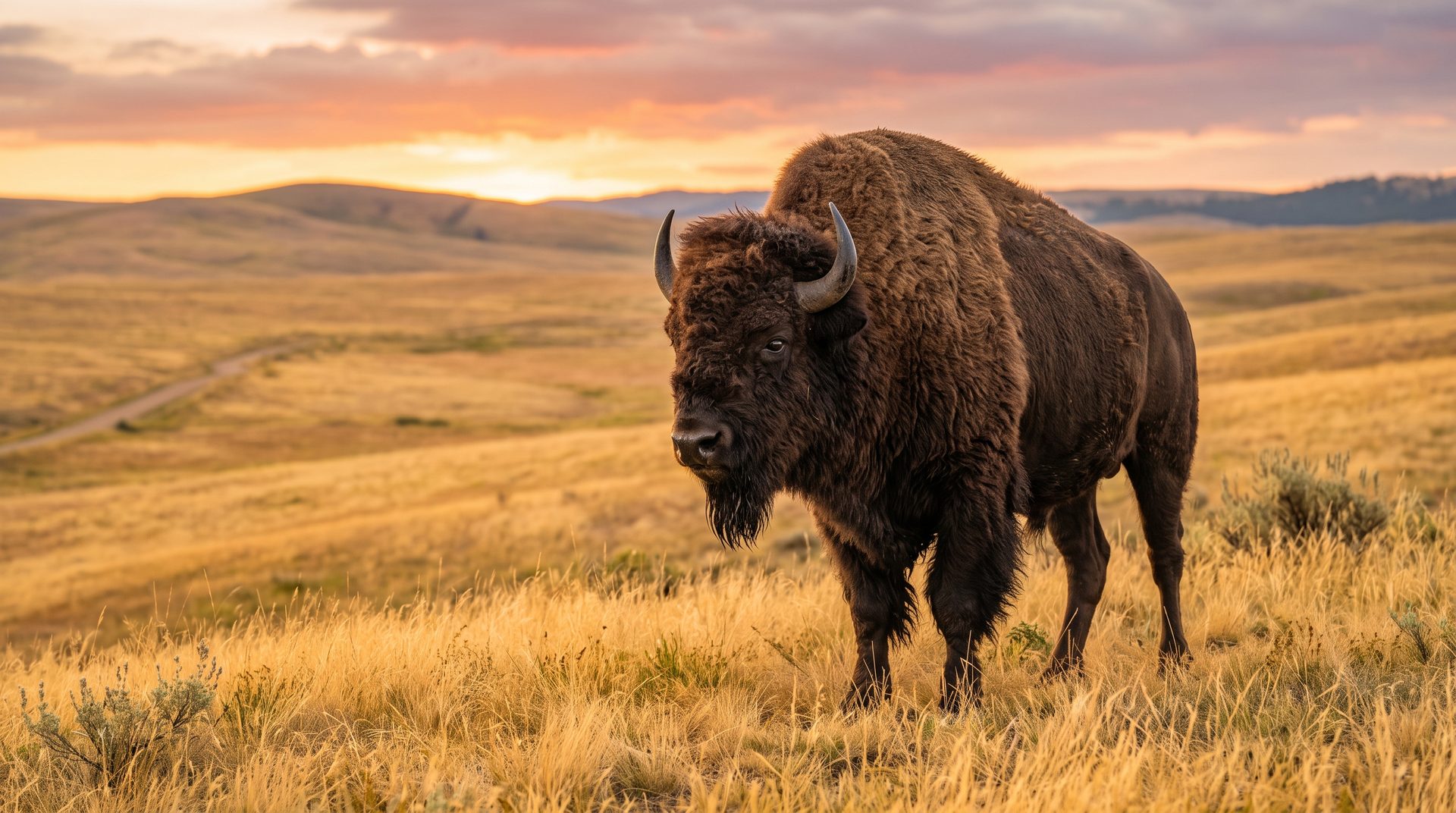
Welcome to the exciting world of the American bison! These massive, furry creatures are famous for roaming open grasslands and surviving tough wilderness environments. Read on to discover incredible facts about their speed, strong bodies, and history.
Quick Facts About Bison
| Feature | Details |
|---|---|
| Habitat | Grasslands, prairies, river valleys, and open plains of North America |
| Diet | Herbivore (grasses, herbs, shrubs, and leaves) |
| Lifespan | 15 to 20 years in the wild |
| Speed | Up to 35 mph (56 km/h) |
| Class | Mammalia |
12 Amazing Bison Facts
1. Are bison the largest land animals in North America?
Yes! The American bison is the largest land mammal in North America. Adult males, called bulls, can weigh up to 2,000 pounds and stand six feet tall at the shoulder. Discover more amazing record-breakers in our animal facts for kids section.
2. What is the difference between a bison and a buffalo?
Many people call bison buffalo, but they are actually two completely different animals. True buffalo live in Africa and Asia, while bison are native to North America and Europe. Bison also have massive shoulder humps and thick, shaggy fur that true buffalo do not have.
3. How fast can a bison run?
Even though they look big and heavy, bison are surprisingly quick athletes. A bison can run at speeds up to 35 miles per hour and jump six feet high into the air. This impressive speed helps them run away from dangerous predators like wolf packs.
4. How do bison keep warm during freezing winters?
Bison are built to handle ice and snow with ease. A bison has a thick, double-layered coat of fur that is so well-insulated snow can rest on its back without melting. They also use their powerful head muscles to sweep deep snow out of the way to reach edible grass below. That winter coat is a great example of an animal adaptation.
5. What do bison eat every single day?
Bison are strict herbivores that eat lots of wild plants. A full-grown bison eats about 24 pounds of grass and prairie vegetation every day. They swallow their food quickly and chew it a second time as cud, similar to cows. Compare that with ocean hunters in our octopus facts for kids.
6. Why do bison roll around in the dirt?
If you see a bison rolling on the ground, it is doing something called wallowing. Rolling in dirt and mud helps bison shed loose summer fur and protects their skin from biting insects. Wallowing also leaves behind large depressions in the ground that help trap rainwater for plants.
7. How do bison communicate with their herd?
Bison use grunts, snorts, and body language to talk to one another. A bison uses its tail to show its mood, raising it straight up into the air when it is angry or excited. Pay close attention to their tails if you ever see one in the wild!
8. Where do wild bison live today?
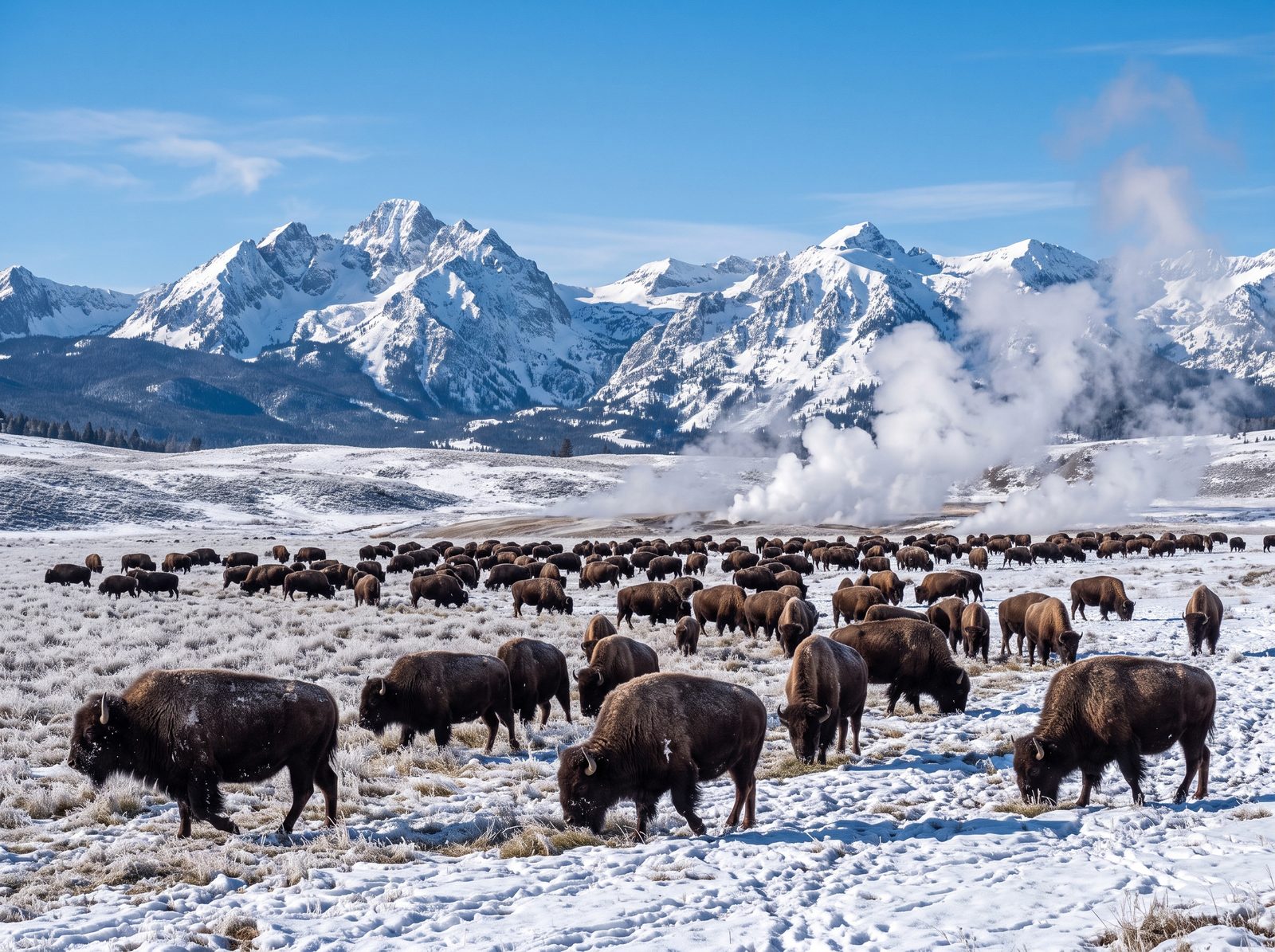
About 15,000 wild bison live in protected parks and refuges, and Yellowstone National Park has one of the largest wild herds, with about 5,000 animals. They thrive in open grasslands and forest valleys where herds can roam. Many more bison live on ranches, but truly wild herds are much smaller and still need protected land.
9. What are baby bison called?
Baby bison are born during the warm spring season. Baby bison are called calves and are nicknamed red dogs because of their bright reddish-orange coat. Their soft fur darkens to rich brown after a few months as they grow larger.
10. How large were bison herds long ago?
Centuries ago, giant herds roamed freely across the North American continent. Scientists estimate that over 30 million bison once roamed the Great Plains before hunting brought them close to extinction. Today, careful conservation programs have brought their numbers back up to hundreds of thousands.
11. Is the bison an official national symbol?
Bison hold an important spot in American history and wildlife culture. In 2016, the American bison was officially named the National Mammal of the United States. This honor recognizes their historical importance to Native American tribes and prairie ecosystems.
12. Are bison dangerous to visitors in parks?
While they look calm while grazing, bison are wild and unpredictable animals. Bison injure more visitors in Yellowstone National Park than bears because people get too close. It is always best to admire bison safely from inside a vehicle or from a far distance. Test your safety knowledge on our animals quiz for kids.
Bison vs. Buffalo Comparison
| Feature | American Bison | True Buffalo (Water or Cape) |
|---|---|---|
| Home Continent | North America | Africa and Asia |
| Shoulder Hump | Very large and muscular | No shoulder hump |
| Horns | Short, sharp, and curved | Very long, broad, or curved |
| Beard & Fur | Thick shaggy winter coat and chin beard | Thin coat with no beard |
Test Your Knowledge: Bison Quiz
Question 1
What is the top speed an American bison can run?
- A) 10 mph
- B) 20 mph
- C) 35 mph
- D) 50 mph
Correct Answer: C
Explanation: Bison look heavy, but they can run up to 35 miles per hour to outrun predators.
Question 2
Where are true buffalo natively from?
- A) North America
- B) Africa and Asia
- C) Australia
- D) Antarctica
Correct Answer: B
Explanation: True buffalo (like water buffalo and Cape buffalo) live in Africa and Asia, while bison live in North America and Europe.
Question 3
Why are baby bison nicknamed "red dogs"?
- A) They bark like dogs
- B) They have orange-reddish fur when born
- C) They like to chase sticks
- D) They sleep in doghouses
Correct Answer: B
Explanation: Baby bison calves have bright reddish-orange coats during their first few months of life.
Question 4
What does a bison raising its tail straight up mean?
- A) It is sleepy
- B) It is hungry
- C) It is happy
- D) It is angry or excited
Correct Answer: D
Explanation: A bison uses its tail as body language; raising it straight up signals that it is agitated or ready to charge.
Question 5
Which national park is famous for its wild bison herds?
- A) Everglades National Park
- B) Yellowstone National Park
- C) Death Valley National Park
- D) Acadia National Park
Correct Answer: B
Explanation: Yellowstone National Park is home to the largest land herd of wild American bison on public land.
Explore more animal facts and try an animals quiz for kids.