
Murder Hornet Facts for Kids: Asian Giant Hornet
Have you ever wondered about the biggest hornet species on Earth? The Asian giant hornet is a fascinating insect famous for its impressive size, bold orange head, and unique hunting habits. While news stories gave it the dramatic nickname "murder hornet," learning the real science shows how these insects live, hunt, and fit into nature.
Why This Matters:
- Protecting Pollinators: Understanding invasive species helps scientists protect native pollinators like local bees.
- Amazing Nature: Learning insect defenses shows how animals evolve clever ways to survive.
- Real Science: Knowing the facts helps replace scary myths with true insect biology!
What Is an Asian Giant Hornet?
An Asian giant hornet (Vespa mandarinia) is the world's largest hornet species, known for its distinct yellow-orange head, sharp jaws, and powerful sting. Belonging to the insect family Vespidae, this massive insect plays a role as a top insect predator in its natural ecosystem. Just like you can read about other amazing creatures in our guide to science animal facts, these insects have special traits that help them survive.
Key Features and Life of the Asian Giant Hornet
At a glance, here is what makes the Asian giant hornet stand out:
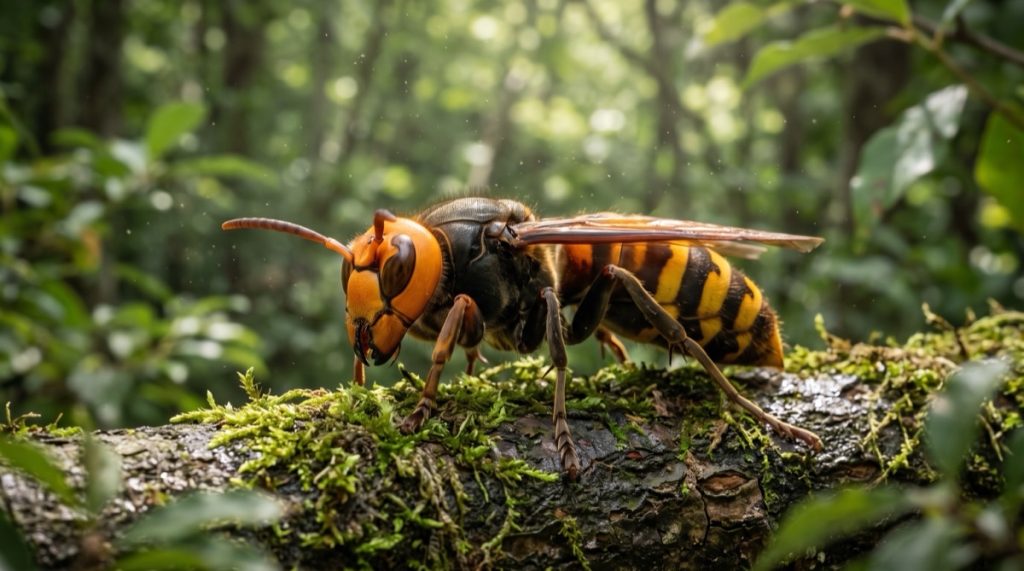
- Massive Body: Queens can grow up to two inches long with a wingspan reaching three inches.
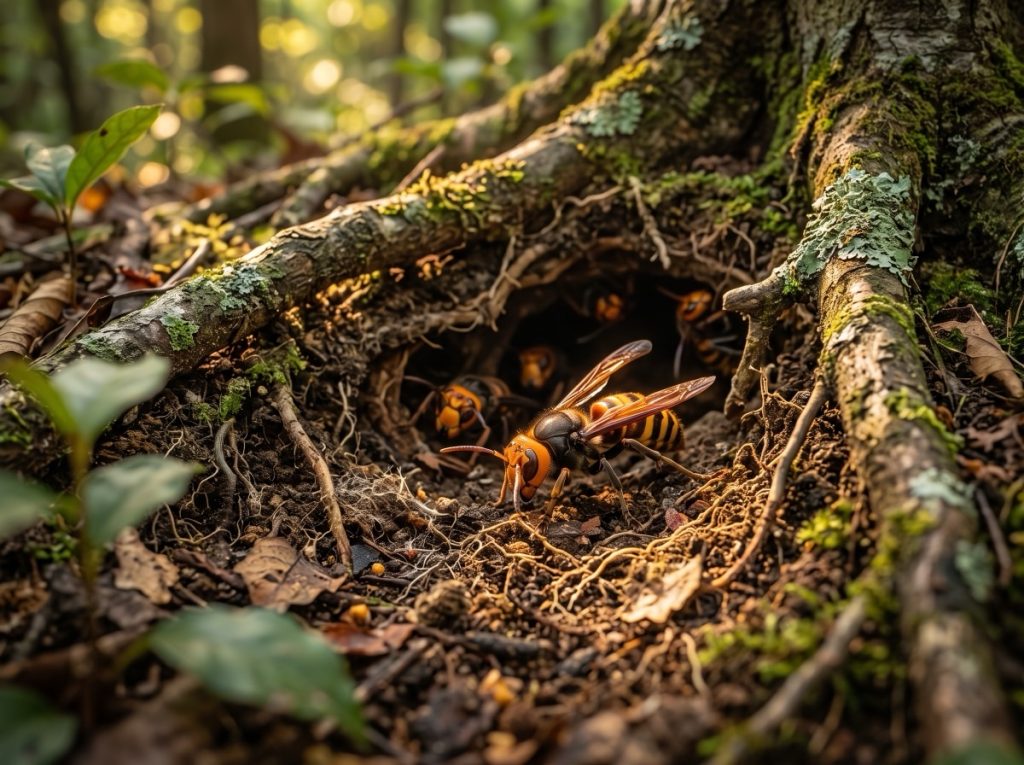
- Underground Nests: Unlike paper wasps that build hanging nests, giant hornets usually nest underground in rodent burrows or rot pockets near tree roots.
- Social Colony: A single queen starts a nest each spring, raising worker hornets to build a buzzing underground kingdom.
- Insect Hunters: Adult hornets capture large insects and turn them into food paste for their growing larvae.
| Quick Fact Category | Detail |
|---|---|
| Scientific Name | Vespa mandarinia |
| Average Size | 1.5 to 2 inches (3.8 to 5 cm) long |
| Wingspan | Up to 3 inches (7.6 cm) |
| Habitat | Temperate forests, low mountains, and subterranean tree roots |
| Native Range | East Asia (Japan, Korea, China, Taiwan) |
| Diet | Tree sap, honey, large insects (beetles, praying mantises, bees) |
| Lifespan | Workers: 3-5 weeks; Queens: up to 1 year |
Size and Appearance
The Asian giant hornet is massive compared to ordinary wasps! Its head is bright orange or light yellow, housing broad mandibles strong enough to chew through tough insect armor. Its body features alternating bands of dark brown and yellow. These physical features are key animal adaptations that help it hunt and defend its underground colony.
Why the Nickname "Murder Hornet"?
In 2019, news headlines began using the dramatic nickname "murder hornet" when a few nests were spotted in North America. Scientists prefer calling them Asian giant hornets. The nickname comes from how fiercely they raid honey bee hives in late summer. They do not hunt people! Agricultural officers worked quickly to clear invasive nests to keep local honey bees safe.
Diet and Hive Raids
Adult hornets cannot swallow solid food easily. Instead, they catch large insects like beetles and caterpillars, crush them into a protein paste, and feed it to their hungry grubs in the nest. In exchange, the grubs produce a sugary liquid that adult hornets drink for energy! During late autumn, hornets raid honey bee hives for food. A small group of hornets can overpower a hive if the bees have no natural defenses.
Sting and Safety
The Asian giant hornet has a long sting—nearly a quarter-inch! It can sting repeatedly because its sting is smooth, unlike a honey bee's barbed sting. Its venom contains chemicals that cause pain and swelling. While they usually ignore humans while foraging, they will defend their underground nest if disturbed. If anyone ever spots one, the best safety rule is to stay calm, back away slowly, and tell an adult.
Honey Bee Defense: The Heat Ball
Nature has built-in surprises! European honey bees have no natural defenses against giant hornets, but Japanese honey bees (Apis cerana japonica) have developed a brilliant trick. When a hornet scout enters their nest, hundreds of bees swarm around it, forming a tight ball. The bees vibrate their flight muscles rapidly. This raises the temperature inside the ball to 117°F (47°C) and increases carbon dioxide levels, safely cooking the hornet scout before it can call its nestmates! Discover more incredible nature tricks in our collection of weird animal facts.
Comparing Bees, Wasps, and Hornets
Understanding how hornets differ from other buzzing insects helps you spot them easily in nature.
| Insect Type | Average Size | Nest Location | Defense / Sting | Main Food |
|---|---|---|---|---|
| Honey Bee | 0.5 – 0.7 inches | Tree hollows, wooden hives | Barbed sting (stings once, then dies) | Nectar and pollen |
| Paper Wasp | 0.7 – 1.0 inches | Paper nests under eaves/branches | Smooth sting (can sting multiple times) | Caterpillars, nectar |
| Asian Giant Hornet | 1.5 – 2.0 inches | Underground burrows, tree roots | Smooth 0.25-inch sting (multiple stings) | Insects, tree sap, bee larvae |
Asian Giant Hornet Vocabulary
| Term | Simple Meaning |
|---|---|
| Apex Predator | An animal at the top of its food chain that hunts other animals. |
| Invasive Species | A plant or animal living outside its native area that can cause harm. |
| Subterranean | Located or living underneath the surface of the earth. |
| Entomologist | A scientist who studies insects and their behavior. |
| Larva (Grub) | The young, worm-like stage of an insect before it becomes an adult. |
| Mandibles | Jaw-like mouthparts used by insects for biting and chewing. |
| Venom | A toxic fluid injected into prey or enemies through a sting or bite. |
| Heat Ball | A defensive move where bees gather tightly to heat up an invader. |
Summary: Asian Giant Hornet at a Glance
Here is how the cycle of an Asian giant hornet colony flows throughout the year:
Queen wakes from winter sleep → Builds underground nest → Raises worker hornets → Workers hunt insects and defend nest → Colony raises new queens for next year
Key Takeaway: The Asian giant hornet is an extraordinary insect predator. While its large size and powerful sting require respect, it plays a natural role in East Asian ecosystems and is not a monster hunting humans.
Amazing Facts
- FACT 1: The Asian giant hornet's wingspan is wider than a standard credit card!
- FACT 2: Just like the biggest ant species in the world, giant hornets rely on chemical signals called pheromones to communicate with colony members.
- FACT 3: A hornet scout marks a target beehive with a special scent so other hornets can find it.
- FACT 4: Japanese honey bees can create temperatures inside a heat ball up to 117 degrees Fahrenheit using only muscle vibrations.
- FACT 5: Giant hornet queens can fly faster than 20 miles per hour — about as fast as a bike zooming down a neighborhood street — when searching for the perfect underground nest spot!
- FACT 6: These hornets prefer nesting underground in abandoned rodent holes or decayed tree root pockets rather than high in trees.
Test Your Knowledge
Test your bug knowledge with this quick quiz! To practice more fun trivia, visit our animal quiz section.
Question 1: What is the scientific name of the Asian giant hornet? A) Apis mellifera B) Vespa mandarinia C) Formica rufa D) Vespula vulgaris Correct Answer: B Explanation: The scientific name for the Asian giant hornet is Vespa mandarinia.
Question 2: Where do Asian giant hornets usually build their nests? A) High up in evergreen tree branches B) Hanging from house rooftops C) Underground burrows or rotten tree roots D) Inside underwater caves Correct Answer: C Explanation: Unlike paper wasps, Asian giant hornets prefer nesting underground in soil burrows or rotten root spaces.
Question 3: How do Japanese honey bees defend their hive against a giant hornet scout? A) By building a thick mud wall B) By spraying water at the hornet C) By forming a hot heat-ball around the hornet D) By flying away to a new home Correct Answer: C Explanation: Japanese honey bees swarm around the hornet and vibrate their muscles to raise the heat-ball temperature to 117°F.
Question 4: What do adult Asian giant hornets drink for energy? A) Whole beetles and crickets B) Tree sap and sugary liquid from larvae C) Flower seeds and leaves D) Soil and fresh grass Correct Answer: B Explanation: Adult hornets feed grubs protein paste and in return drink a sugary energy fluid secreted by the larvae, as well as tree sap.
Question 5: Why can an Asian giant hornet sting multiple times? A) It loses its sting and grows a new one instantly B) It has a smooth sting that does not get stuck in skin C) It uses its front legs to sting D) It shoots venom out of its eyes Correct Answer: B Explanation: Unlike honey bees which have barbed stings that tear off, hornets have smooth stings that pull out easily.
Frequently Asked Questions
Are Asian giant hornets found everywhere in North America?
No. A few isolated nests were found in the Pacific Northwest in 2019, but wildlife officials launched strict eradication programs to remove them. They are native to East Asia.
Do murder hornets actively hunt human beings?
No, they do not hunt humans. They eat insects, tree sap, and honey. They only sting people if their nest is disturbed or if they feel threatened.
How big is the sting of an Asian giant hornet?
The sting of an Asian giant hornet is about 0.25 inches (6 mm) long, which is long enough to puncture thick clothing or bee suit fabric.
Why do scientists worry about Asian giant hornets in new countries?
Scientists worry because giant hornets can attack local honey bee hives. Because North American bees haven't evolved defense strategies like the heat-ball, hornets could harm bee populations.
Explore More Animal Secrets
Want to keep exploring fascinating creatures? Check out these fun articles on SmartClass4Kids:
- Explore general facts at our main animal facts hub.
- Discover how creatures survive with animal adaptations.
- Read about weird and wonderful species in our guide to weird animal facts.
- Test your science skills on our animals quiz.
- Learn about giant bugs like the biggest ant.