The 6 Kingdoms of Life for Kids
Did you know scientists sort every living thing into six big groups? These groups are called kingdoms — just like kingdoms in fairy tales, but for science!
Let’s explore the six kingdom (Eubacteria, Archae, Protista, Fungi, Plantae, and Animalia) with easy explanations, examples, and fun facts just for kids!
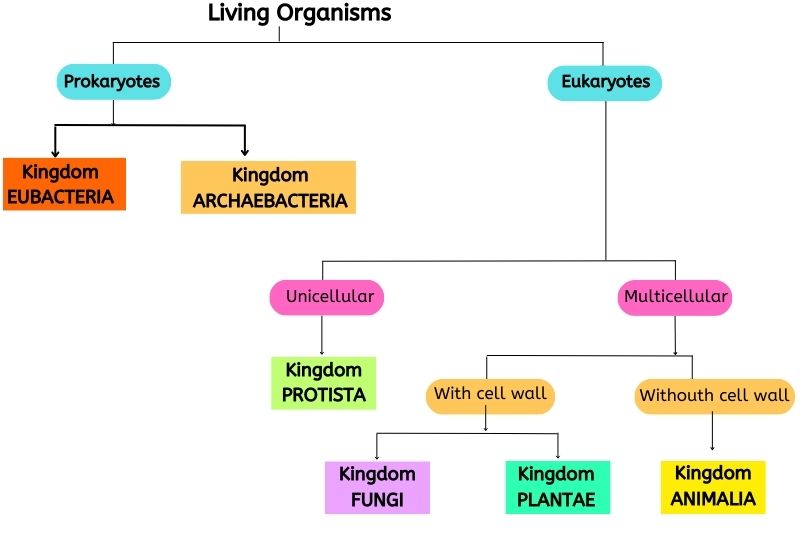
What Are the 6 Kingdoms of Life?
1. Animalia (Animals)
2. Plantae (Plants)
3. Fungi
4. Protista
5. Archaebacteria
6. Eubacteria
The cell is the smallest unit of life. It is also known as the “building blocks of life”. The study of cells is called cell biology, cellular biology, or cytology.
Also Read – Plant Cell
1. Cell Type
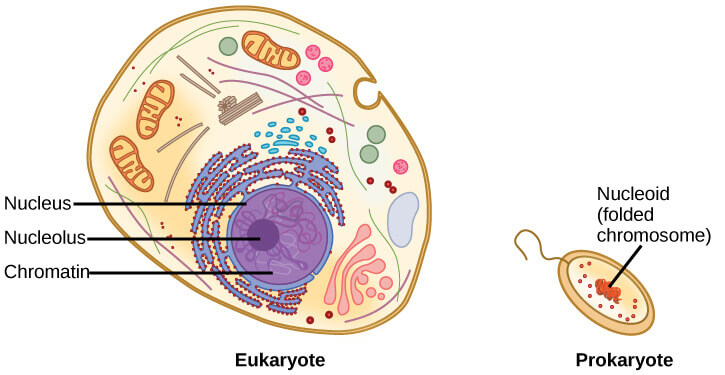
➤ There are TWO types of cells:
➤ Eukaryotic – which contain a nucleus.
➤ Prokaryotic – which doesn’t have a nucleus.
2. Cell Number
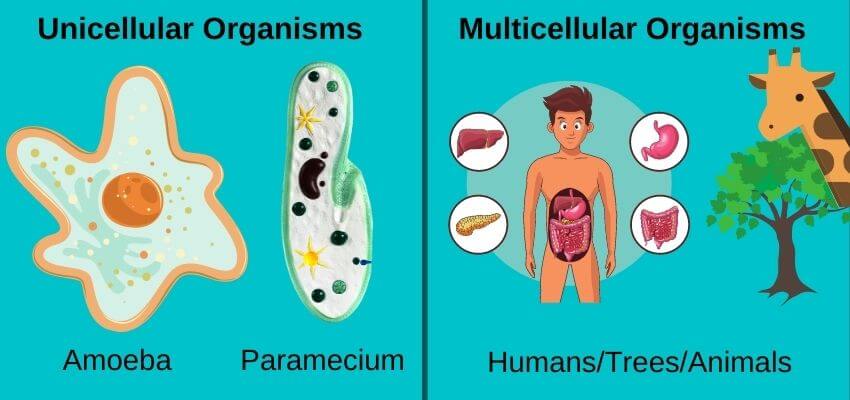
➤ Organisms exist as either single cells or multiple cells
➤ Unicellular organisms are made up of only ONE cell.
➤ On the other hand, Multicellular organisms consist of more than one cell.
3. Feeding Type
➤ Organisms either make their food or consume other organisms.
➤ Autotroph or Producer – Plants are called Autotroph or Producer because they make their food using PHOTOSYNTHESIS.
➤ Heterotroph or Consumer – Animals are called Heterotroph or Consumer because they eat other organisms to survive.
Main features of each kingdom
1. Animals (Animalia) Kingdom
- What it means: Living things that move and eat other organisms.
- Type of cell: Eukaryotic (with a nucleus)
- How many cells: Multicellular (many cells)
- How they eat: Heterotrophs (they can’t make their own food)
➤ The animal kingdom is the largest kingdom, with over 1 million known species.
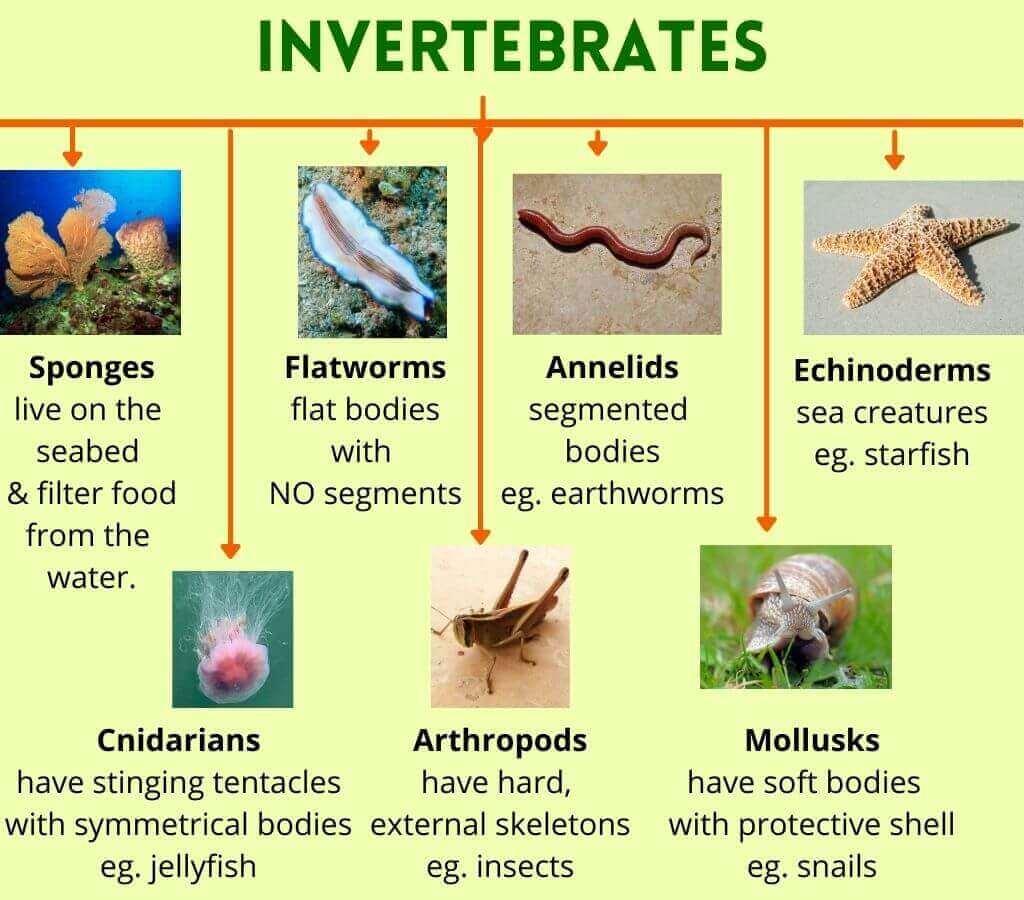
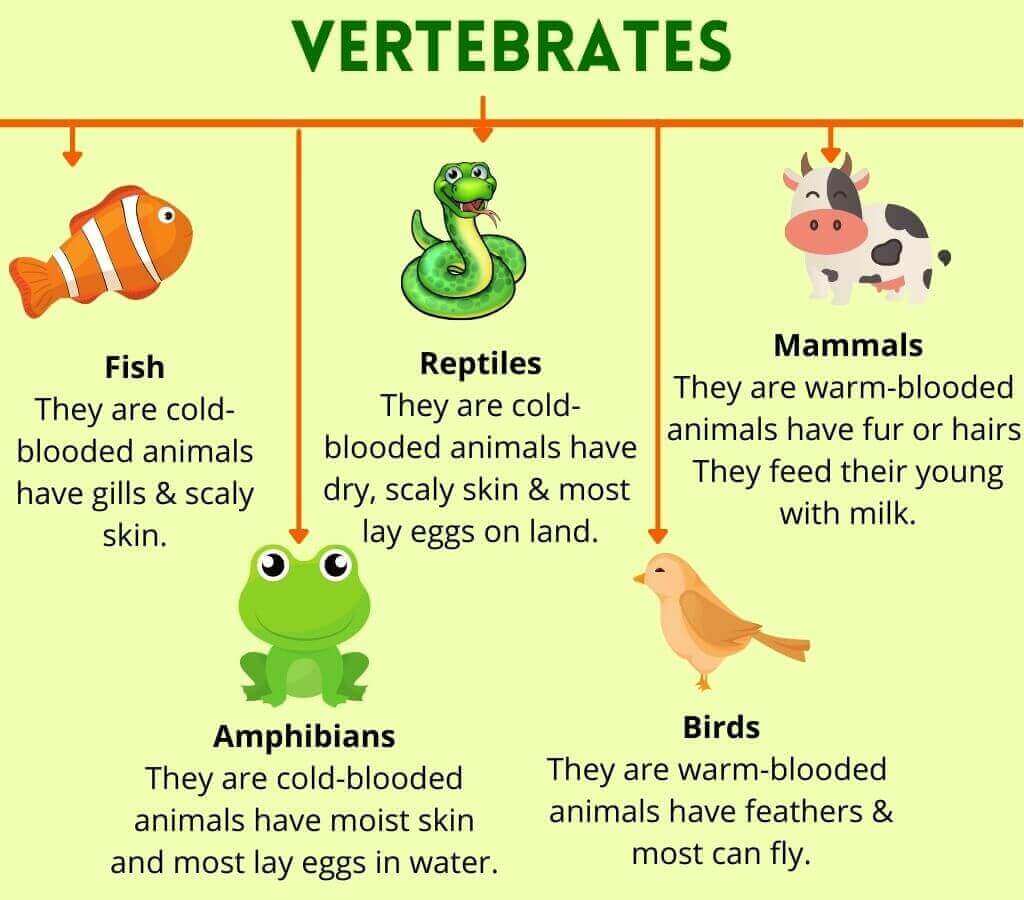
➤ Animals can be divided into two groups: Vertebrates and Invertebrates.
➤ Vertebrates have backbones, e.g., humans.
➤ Invertebrates don’t have backbones, e.g. Worms.
➤ All organisms in the Animal kingdom are heterotrophs that depend on plants and other organisms for nutrition.
👉 Learn more about animal adaptations and how animals survive in different environments.
2. Plants (Plantae) Kingdom
- What it means: Green living things that make their own food using sunlight.
- Type of cell: Eukaryotic
- How many cells: Multicellular
- How they eat: Autotrophs (make their own food)
Examples: Trees, grass, flowers, and ferns.
✨ Fun Fact: Plants use a process called photosynthesis to make food from sunlight!
👉 Check out how the photosynthesis process works in plants.
➤ The Plant kingdom is the second largest kingdom with over 25,000 known species.
➤ Plants can be divided into two main groups: vascular and nonvascular.
➤ Vascular plants – soak up the water using their roots. These plants have true stems, leaves, and roots.
➤ Nonvascular plants – soak up the water using their whole bodies. E.g. Moss is an example of a nonvascular plant.
➤There are two types of vascular tissue called XYLEM & PHLOEM responsible for carrying water, minerals, and photosynthesis products throughout the plant
3. Fungi Kingdom
- What it means: These living things absorb food from what they grow on.
- Type of cell: Eukaryotic
- How many cells: Mostly multicellular (some are single-celled)
- How they eat: Heterotrophs
➤ Fungi do not contain chlorophyll like plants. Hence, they are not capable of photosynthesis.
➤ They reproduce with the help of spores.
➤ They feed themselves by decomposing matter or eating off their hosts as parasites.
➤ Molds, mildews, yeasts, lichens, and mushrooms are some common types of fungi.
➤ Fungi play a vital role in many ways.
➤ Many antibiotic drugs are derived from fungi, such as Penicillin antibiotics derived from a common fungi Penicillium.
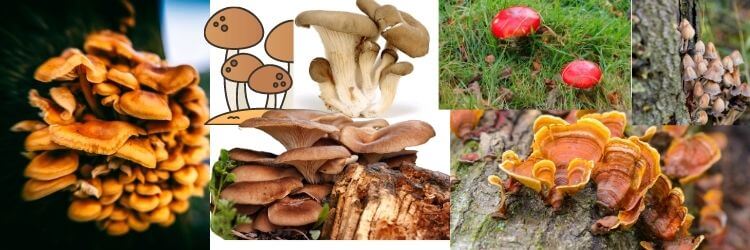
➤ It helps in the decomposition of organic matter, which is necessary for many life cycles, such as carbon, nitrogen, and oxygen cycles.
➤ By breaking down organic materials, fungi release carbon, nitrogen, and oxygen back into the ecosystem.
4. Protista Kingdom
- What it means: A mixed group! Not animals, plants, or fungi—but a little like all of them.
- Type of cell: Eukaryotic
- How many cells: Mostly unicellular (one cell)
- How they eat: Some make their food, others eat things.
➤ Protista is also known as the odds and ends because the kingdom members are very odd from each other.
➤ Protista kingdom has THREE main categories:
- Plant-like protists, e.g., algae
- Fungus-like protists, e.g., slime mold
- Animal-like protists, e.g., protozoa
➤ Some are heterotrophs, and some are autotrophs.
➤ Some protists are beneficial, but some can cause diseases in humans, such as Amebic dysentery, African Sleeping Sickness, Malaria.
➤ Protists are found in lakes and ponds.
➤ Some of the examples of protists are Amoeba, Euglena, and Plasmodium.
5. Archaebacteria Kingdom
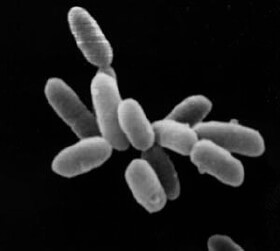
- What it means: Tiny organisms that live in extreme places like hot springs or salty lakes!
- Type of cell: Prokaryotic (no nucleus)
- How many cells: Unicellular
- How they eat: Some make food, some don’t.
6. Eubacteria Kingdom
- What it means: Common bacteria that live everywhere—even inside you!
- Type of cell: Prokaryotic
- How many cells: Unicellular
- How they eat: Both autotrophs and heterotrophs
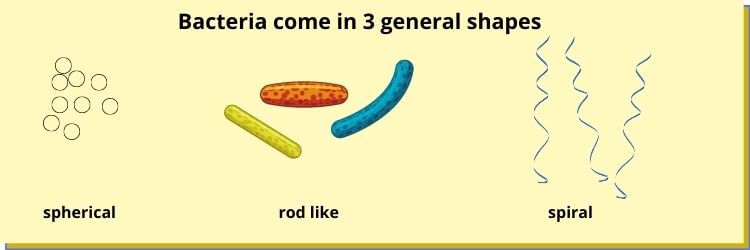
- This kingdom makes up most of the bacteria in the world.
In Summary - 6 Kingdoms of Life
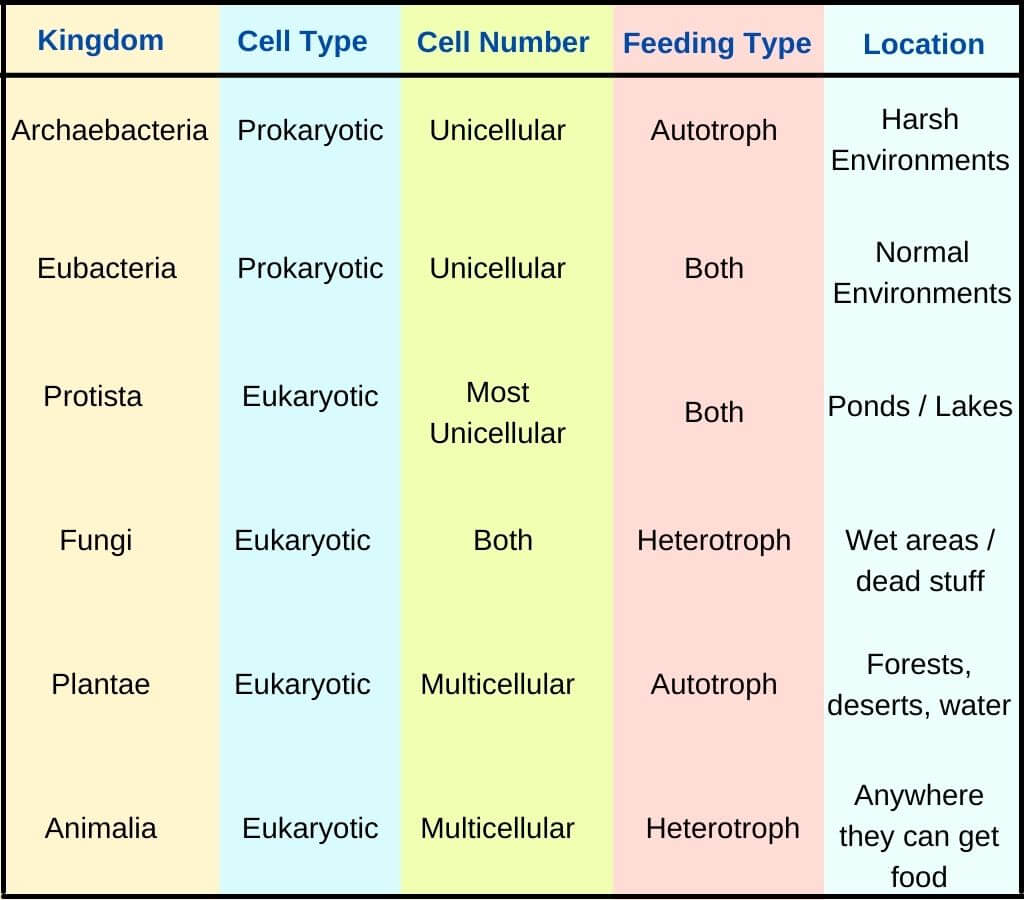
Hope you enjoyed to learn about 6 kingdoms of life. For more – 6 kingdoms of life. Now that you’ve learned about the six kingdoms of life, why not test your knowledge?
👉 Try our fun and engaging science quiz for kids and see how much you remember!
Geography Facts
Latest Articles
.