
Biggest Ant in the World for Kids
Have you ever wondered what the biggest ant in the world looks like? While most ants crawling across your sidewalk are tiny, some tropical ants can grow as long as an adult’s finger! The giant Amazonian ant (Dinoponera) holds the record as the largest worker ant on the planet, reaching incredible lengths in the rainforests of South America.
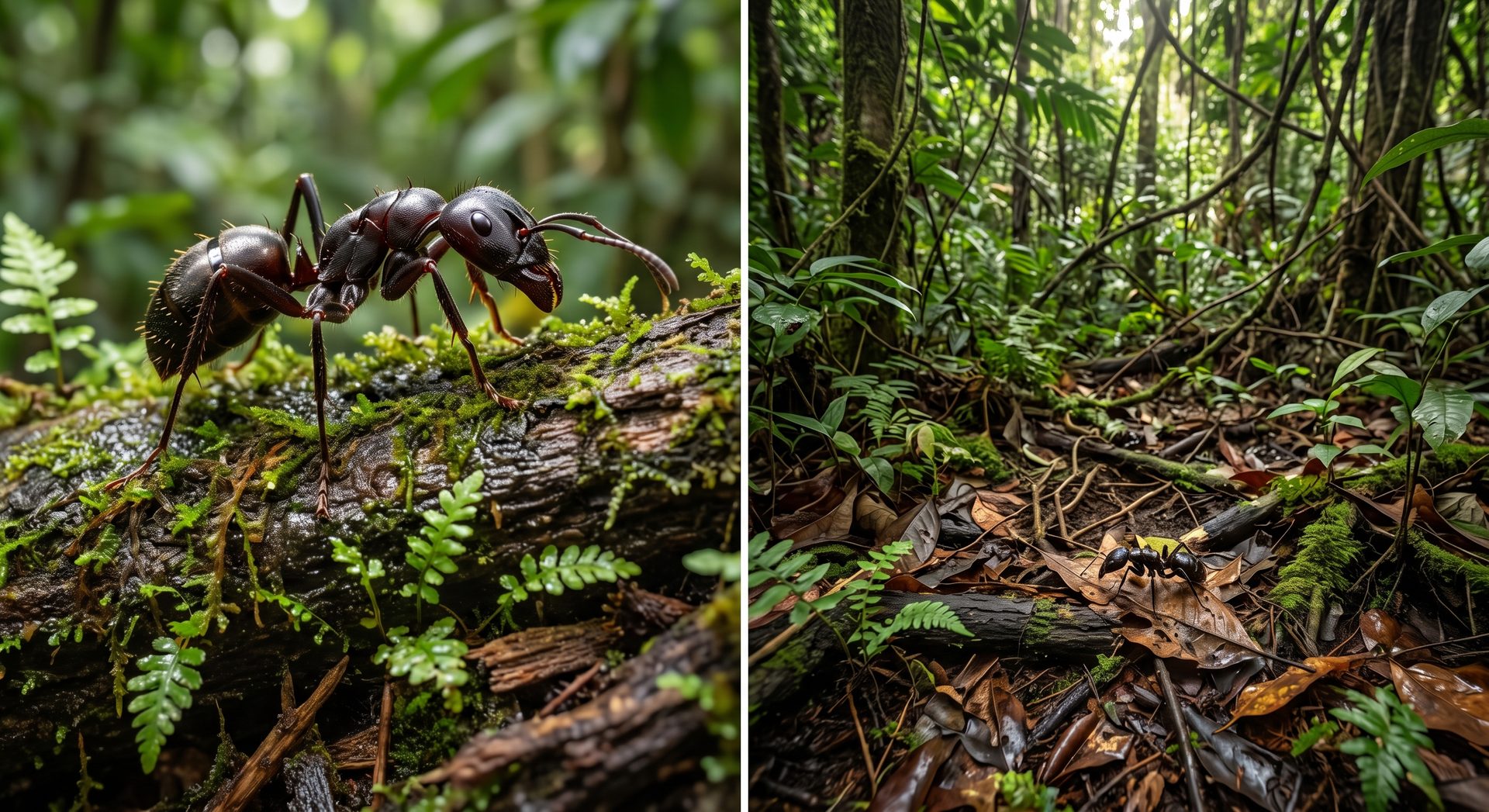
Quick Facts: Giant Amazonian Ant
| Fact Category | Information |
|---|---|
| Scientific Name | Dinoponera grandis / Dinoponera gigantea |
| Habitat | South American Rainforests |
| Diet | Carnivorous (Insects, spiders, small snails) |
| Lifespan | 1 to 3 years |
| Size | Up to 1.6 inches (3 to 4 cm) long |
| Class | Insecta |
12 Amazing Giant Ant Facts
1. What is the biggest ant in the world?
The biggest ant in the world by worker size is the giant Amazonian ant, also known by its scientific genus name Dinoponera. These gigantic insects can grow up to 1.6 inches (4 centimeters) in body length. You can explore many other fascinating creatures in our detailed guide to animal facts.
2. How big does the giant Amazonian ant grow?
Most everyday ants measure only a few millimeters, but giant Amazonian ant workers grow up to 4 centimeters long, which is about the size of a paperclip! Their legs and jaws are large enough that you can easily spot them walking across the forest floor from several feet away. Their massive body frame helps them carry heavy food through dark rainforest trails.
3. Where do the biggest ants in the world live?
These huge insects are found in the dense, warm rainforests of South America, including countries like Brazil, Peru, and Colombia. They prefer living in leaf litter on the shaded forest floor where humidity remains high. To learn about how animals survive in tropical habitats, check out our lesson on animal adaptations.
4. Do giant Amazonian ants have a queen?
Unlike most ant species, giant Amazonian ant colonies do not have a distinct queen ant. Instead, one dominant female worker, called an alpha gamergate, takes on the role of laying all the eggs for the nest. If the alpha worker loses her position, another worker challenges her to take over egg-laying duties.
5. What do giant Amazonian ants eat?
Forget picnic crumbs. Giant Amazonian ants hunt like tiny rainforest superheroes packing a protein lunch for home. One ant walks alone and looks for insects, spiders, worms, or a small snail — not cookies. Think of their jaws as mini pliers: strong enough to crack a beetle shell, then carry dinner back to the nest. That is very different from the tiny ants you see marching toward a sandwich.
6. How do giant ants hunt for their food?
Instead of hunting in huge groups, giant Amazonian ants usually hunt completely alone on the forest floor. They use their sharp eyesight and sensitive antennae to detect vibrations and scent trails left by prey. Once they catch an insect, they immobilize it using their powerful sting before carrying it home.
7. Do the biggest ants in the world sting?
Yes, giant Amazonian ants possess a powerful venomous sting that they use for hunting and self-defense. While their sting is painful to humans, it is not deadly unless a person has a rare allergic reaction. They reserve their venom mainly to overpower struggling prey on the rainforest floor.
8. How do giant ants communicate with each other?
Giant ants communicate primarily through chemical signals called pheromones and physical tapping. They touch antennae to recognize nestmates and leave scent tracks to mark pathways back to the colony entrance. These chemical messages help the colony coordinate defense and nest cleaning efficiently.
9. What makes the driver ant queen so famous?
While Dinoponera has the largest workers, the African driver ant queen becomes the largest ant overall during egg-laying season! Her abdomen swells up to 2 inches (5 centimeters) long, allowing her to lay millions of eggs every month. You can test your animal knowledge further with our interactive animals quiz.
10. How long do giant Amazonian ants live?
An individual worker ant in a Dinoponera colony can live between 1 and 3 years in the wild. This is much longer than many small ant species, whose workers may only live for a few weeks or months. Their sturdy exoskeleton protects them against environmental hardships.
11. What predators hunt the biggest ant in the world?
Despite their large size and painful sting, giant ants are hunted by anteaters, birds, spiders, and large frogs. Armadillos and forest birds frequently dig up ant nests to snack on protein-rich pupae and adult ants. Their dark black coloring helps them blend into shadows to avoid being spotted from above.
12. Why are giant ants important to the rainforest ecosystem?
Giant ants are the rainforest’s cleanup crew and secret gardeners. They eat lots of small bugs and mix the soil like kids poking holes in packed playground dirt. Those tunnels — sometimes as deep as a grown-up is tall — let rain and air reach plant roots. Without helpers like this, the forest floor would get crowded and the soil would stay hard. Compare that teamwork with beetles and butterflies in our lady bug life cycle guide.

Comparison: Giant Amazonian Ant vs. Bullet Ant
| Feature | Giant Amazonian Ant (Dinoponera) | Bullet Ant (Paraponera clavata) |
|---|---|---|
| Worker Length | Up to 1.6 inches (4.0 cm) | Up to 1.2 inches (3.0 cm) |
| Sting Pain Level | Painful, localized | Extremely intense (Schmidt Index 4+) |
| Colony Queen | No true queen (Alpha worker) | Distinct queen ant present |
| Colony Size | Small (under 100 workers) | Larger (1,000+ workers) |
| Primary Habitat | Rainforest ground litter | Rainforest floor and tree canopy |
Test Your Knowledge: Giant Ant Quiz
Question 1
What is the biggest ant species in the world by worker length?
- A) Fire Ant
- B) Giant Amazonian Ant (Dinoponera)
- C) Carpenter Ant
- D) Sugar Ant
Correct Answer: B
Explanation: Dinoponera workers grow up to 1.6 inches long, making them the largest worker ants on Earth.
Question 2
Where do giant Amazonian ants live in the wild?
- A) Deserts of Australia
- B) Forests of Europe
- C) Rainforests of South America
- D) Mountains of Asia
Correct Answer: C
Explanation: Giant Amazonian ants inhabit the warm, moist rainforest floors of South America.
Question 3
How does a Dinoponera colony reproduce without a traditional queen?
- A) Eggs hatch on trees automatically
- B) An alpha worker (gamergate) lays all the eggs
- C) They steal eggs from other species
- D) Male ants lay the eggs
Correct Answer: B
Explanation: A dominant female worker called an alpha gamergate takes on the role of laying eggs for the nest.
Question 4
What is the primary diet of giant Amazonian ants?
- A) Tree bark and grass
- B) Flower nectar only
- C) Invertebrates like insects, spiders, and snails
- D) Tropical fruits only
Correct Answer: C
Explanation: Giant ants are carnivorous hunters that feed on spiders, insects, and small forest invertebrates.
Question 5
Why are giant ants helpful to the rainforest?
- A) They build tall trees
- B) They eat harmful pests and help aerate the soil
- C) They produce honey for other animals
- D) They fly around and pollinate flowers
Correct Answer: B
Explanation: Giant ants hunt insects and dig underground tunnels that improve soil quality for plants.
Explore more animal facts and try an animals quiz for kids.